KUKA Printer
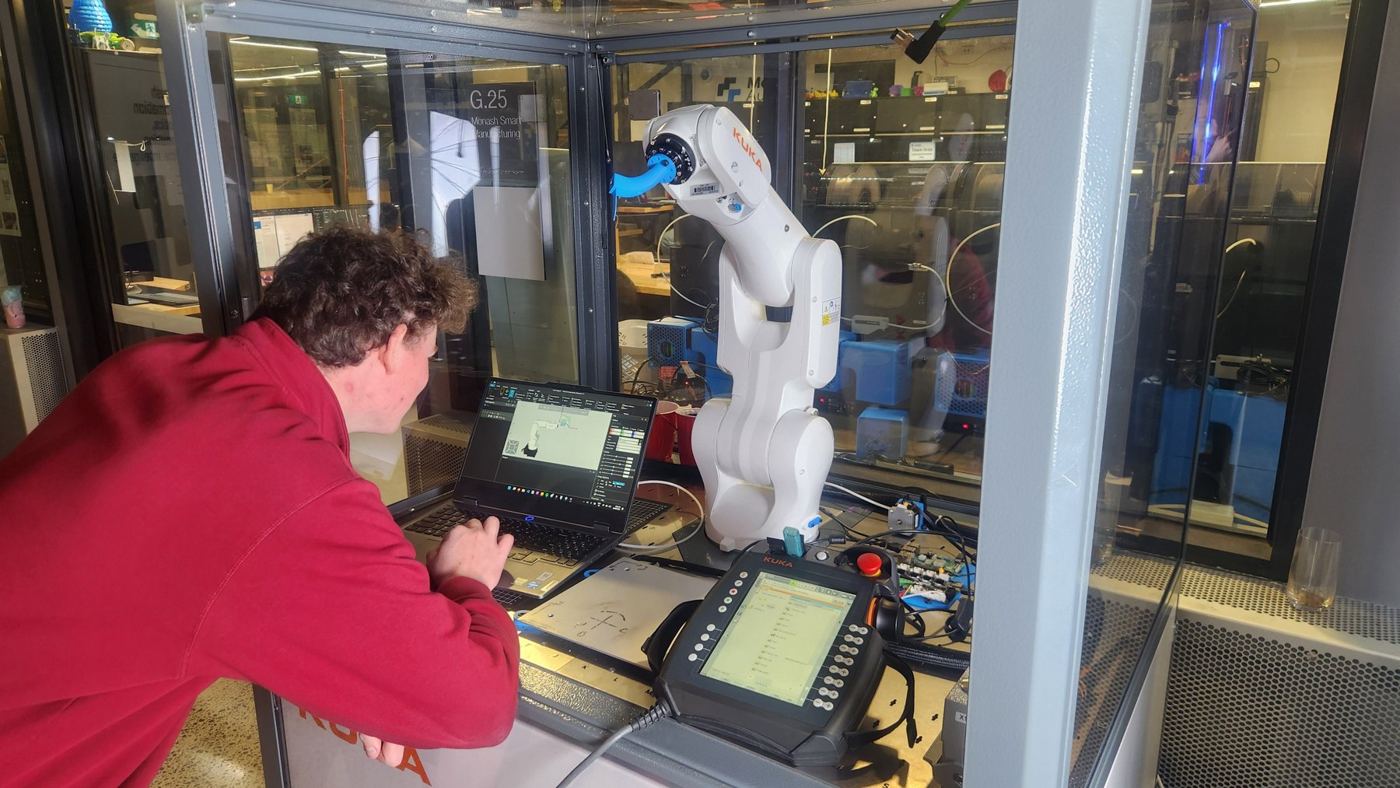
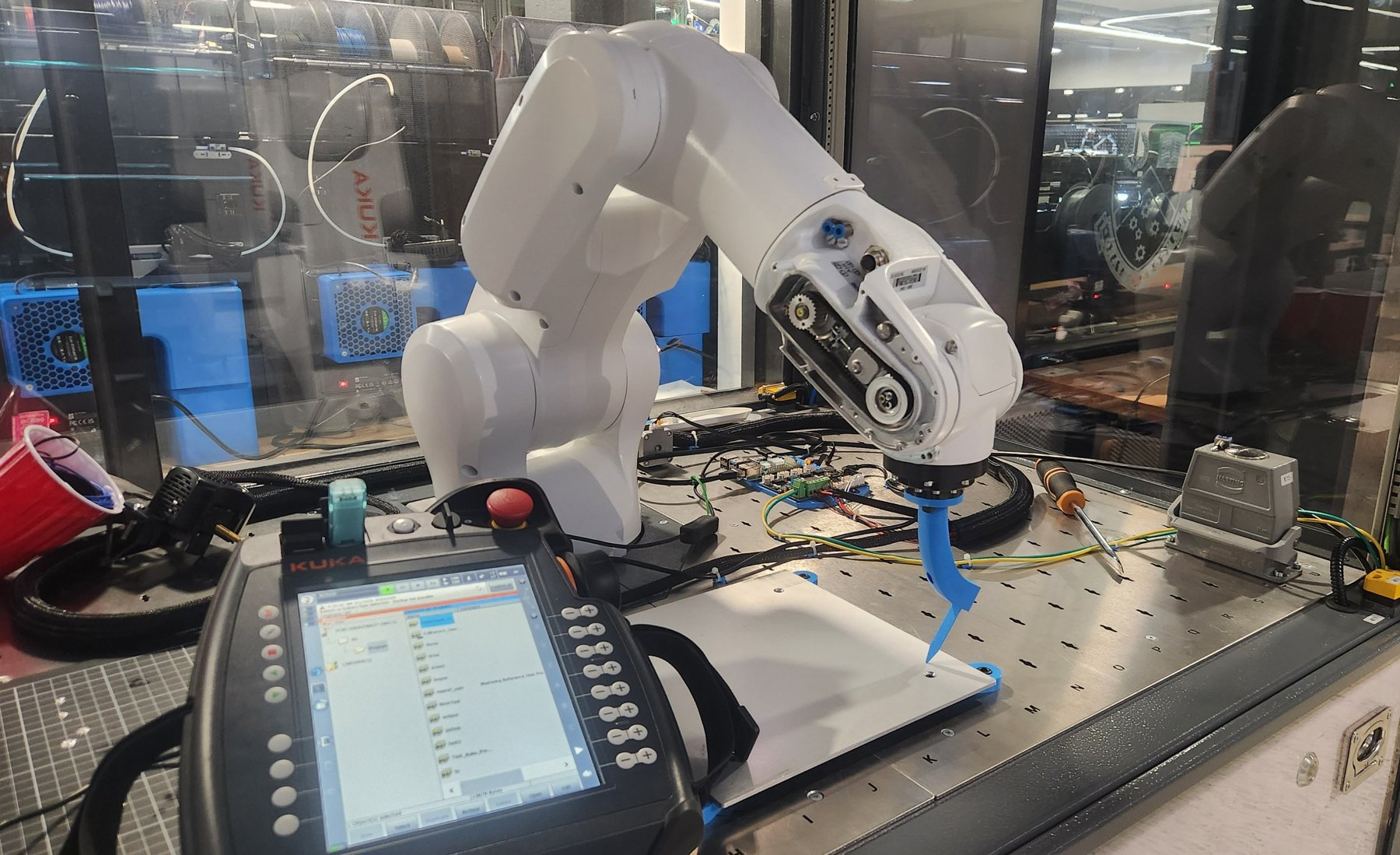
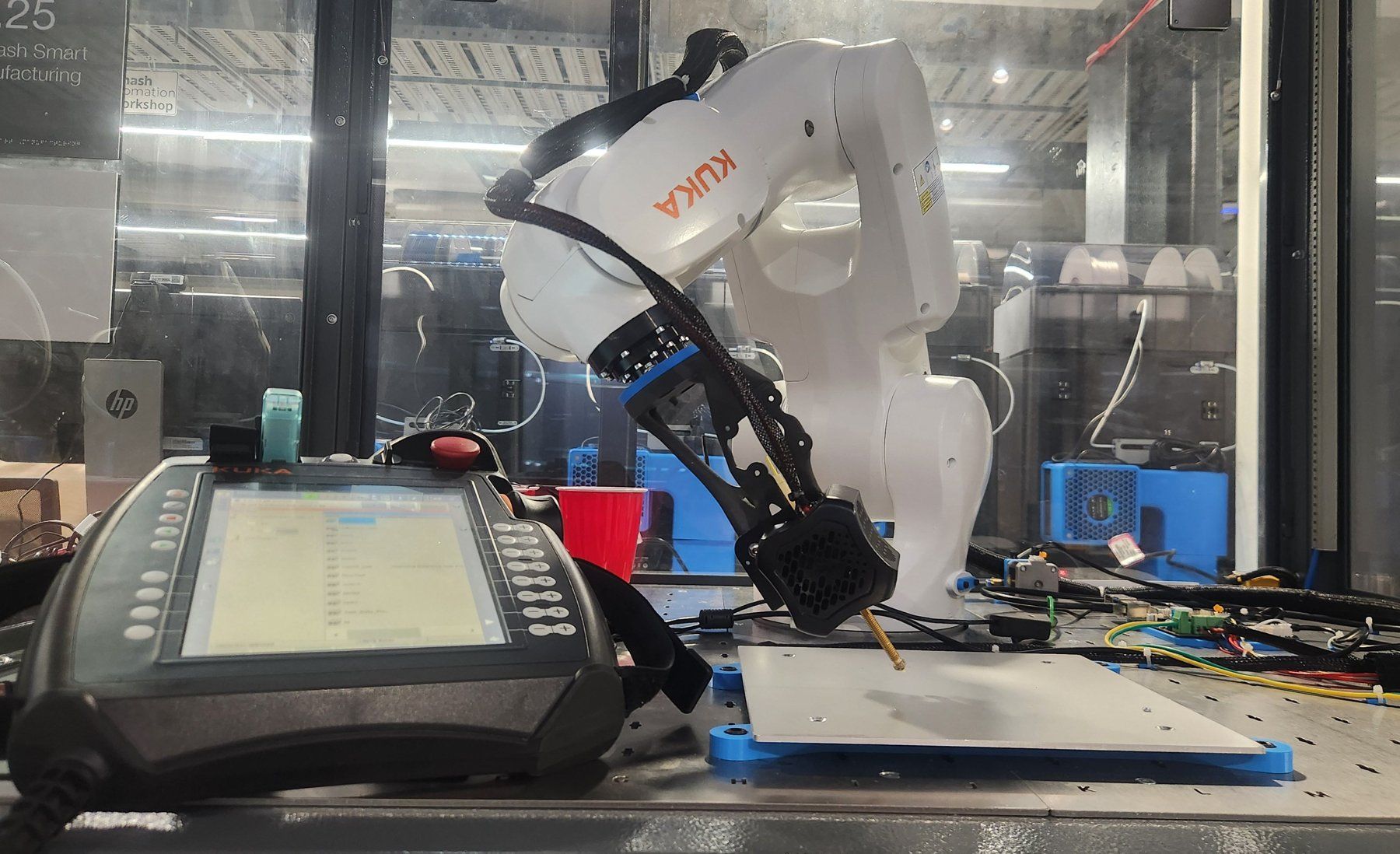
A 6-axis KUKA robot arm that 3D prints complex parts in multiple planes, with layers up to 30° off the bed for far greater geometry and strength.
- Program
- Manufacturing
- Status
- Research
- Project lead
- Angus Geddes
- Stack
- KRL, Raspberry Pi 4, XML commands
The problem
Traditional FDM printers use an XYZ gantry to move the print head in three linear axes. It is cheap, reliable and simple, and remains the standard for almost every printer today. But some geometries need bulky supports, and layer delamination, where a part is much weaker between layers, restricts the load-bearing capacity of printed parts.
Our solution
A 6-axis arm can print at angles impossible in any other system. Tilting the extrusion head allows much sharper overhangs, depositing filament directly onto the part. And changing the planar angle of layers along the load-bearing geometry lets prints be tailored to the specific needs of a design.
End goal
Once finished, a Raspberry Pi 4 will control the whole system, accept any properly sliced file and convert its instructions into the correct extrusion amount and arm position. Programmed in KRL, the arm acts as a server to the Pi, waiting for XML commands and moving along a path in time with the extruder. The project has pushed the team's programming and networking skills, teaching new languages, protocols and software.