
Initiatives / Sustainability & AgTech
Automated Microscope
A system for characterising airborne particulate emissions from high-volume 3D printing labs, enabling rapid screening to estimate microplastic and nanoparticle exposure.
- Program
- Sustainability & AgTech
- Status
- Prototyping
- Project lead
- Alex Wessels
- Camera
- MaixCAM, 10 mm macro lens
3D-printed pollution
3D printing has quickly become one of the leading prototyping methods, but its rapid adoption has outpaced consideration of the harmful particulates it produces. The Automated Microscope was designed to fill that gap and assess the risk posed by airborne microplastics.
Grid sample scanning
Glass fibre filters catch micro particles as air is drawn through a filter system. The microscope is built around a MaixCAM camera with a 10 mm tapered macro lens, giving a ground sampling distance of 0.469 microns per pixel at 4x magnification, fine enough to resolve particles as small as 50 microns. The system steps across the filter in a grid, capturing an image at every field of view, and the images are stitched into one macro composite.
Movement system
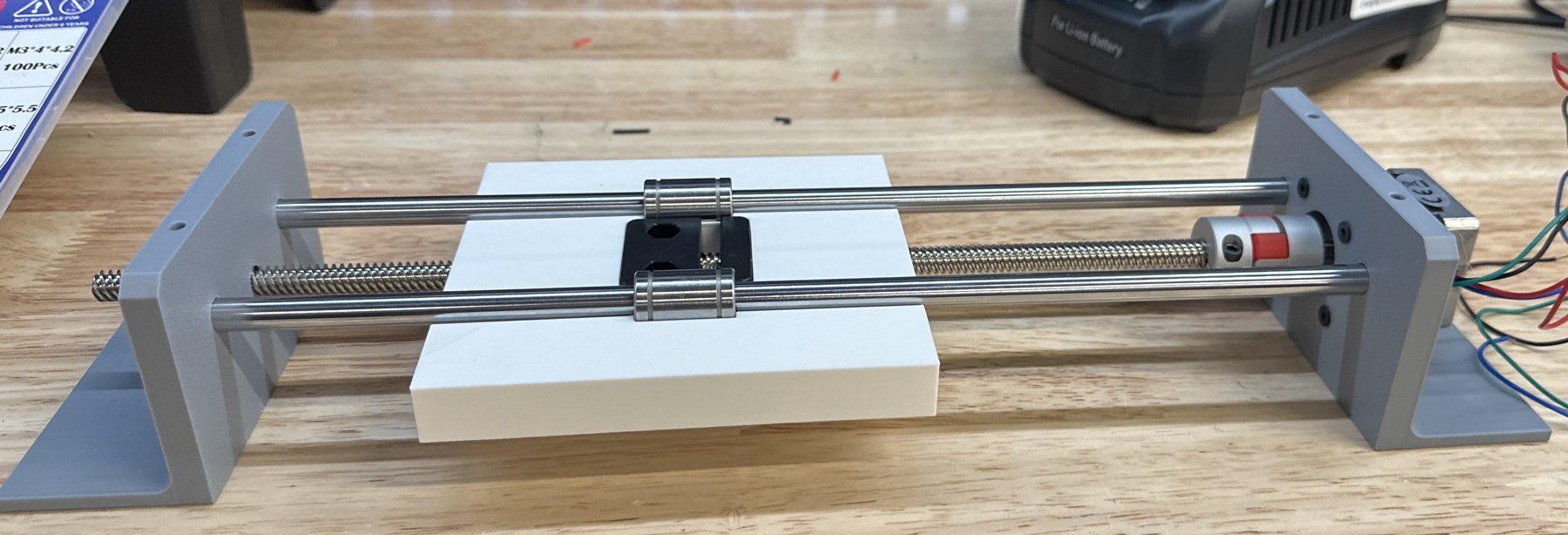
An in-house movement system carries the microscope stage on two axes for horizontal movement across the slide, while a third, entirely separate axis moves the camera for focus.
Automated particle detection
Once stitched, the composite image goes to a custom detection system. Using classic computer vision techniques, the software locates and outlines individual particles across the filter without needing a trained model, tallies how many are present and then sorts them by size and colour.
Where next
The vision is a fully hands-off system that collects samples, analyses them and sends the data wirelessly for further interpretation. The next step is a locally trained detection system that can run on the MaixCAM, followed by quality-of-life improvements such as auto-focus.