Space Station Digital Twin
Payload logistics for a space station: a sensor-fused digital twin that lets an assistant robot find and retrieve cargo for astronauts.
- Program
- Research & FYP
- Type
- Final Year Project
- Sensing
- RFID/UWB, depth cameras, LiDAR
Motivation
Stowage operations consume approximately 25% of crew time aboard the International Space Station, against an actively tracked inventory exceeding 92,000 items. At NASA's 2021 commercial reimbursement rate of roughly USD 130,000 per crew-hour, manual inventory management is a quantifiable, recurring cost. On ISS-successor commercial platforms, with smaller crews and higher cargo throughput per unit volume, that overhead becomes a competitive liability.
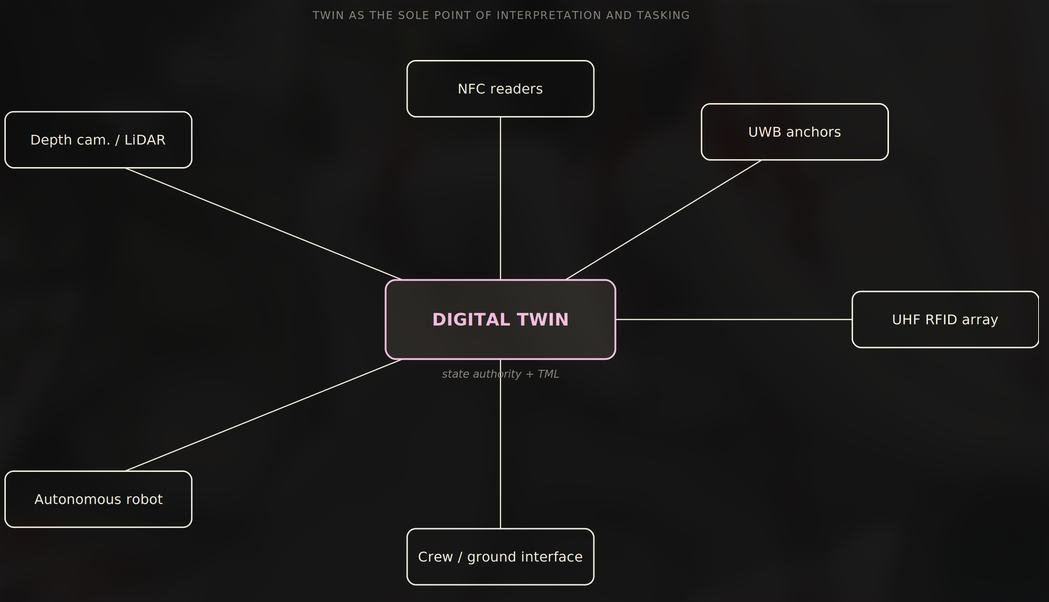
Existing inventory systems treat the digital model as a passive record updated by independent sensing subsystems, producing persistent divergence between recorded and physical state that ground reconciliation can only identify after the fact.
Methodology
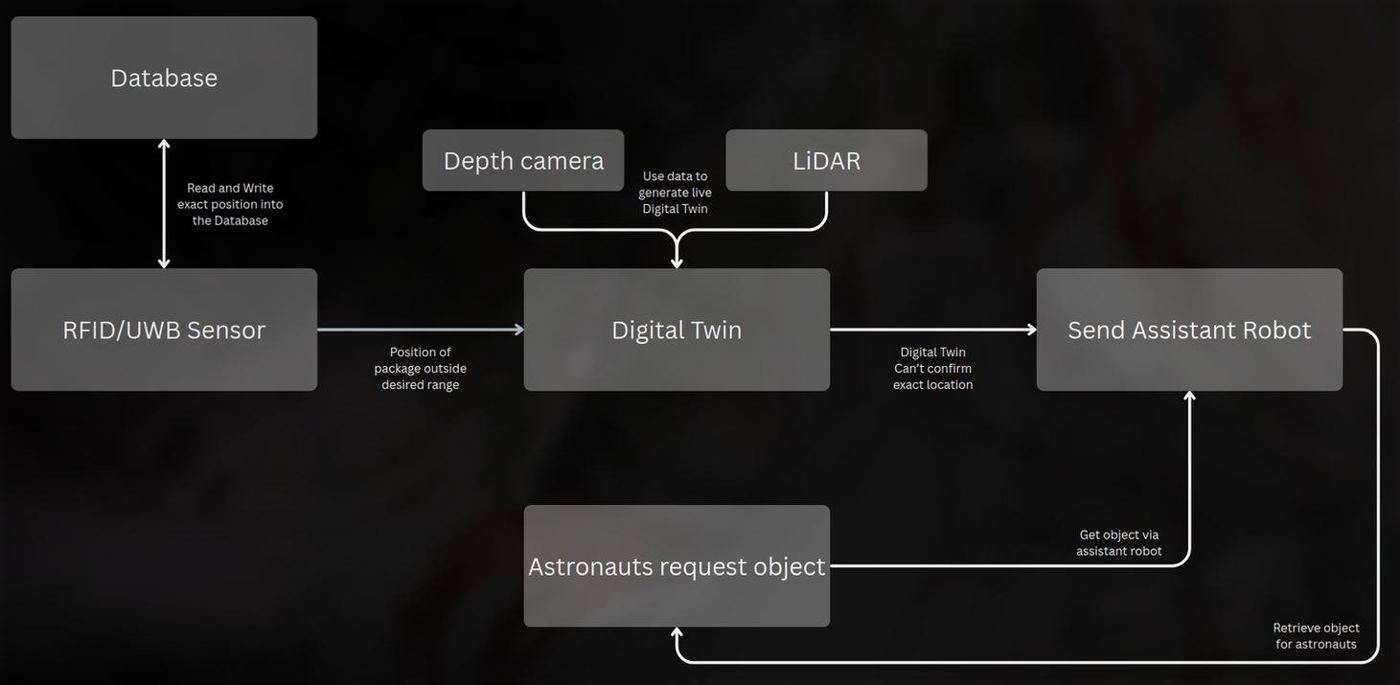
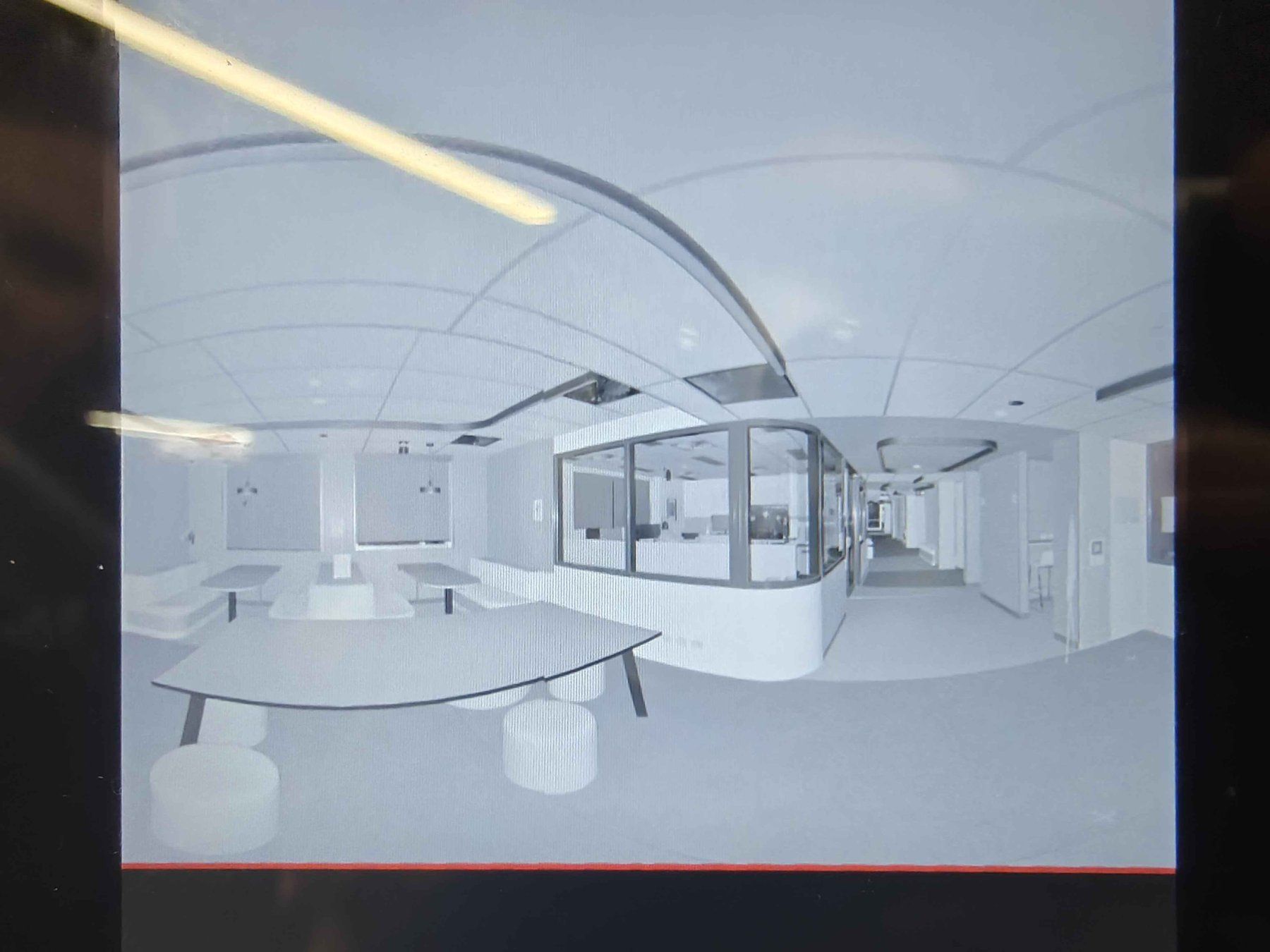
The system enables autonomous object retrieval aboard a space station through a sensor-fused digital twin architecture. RFID and UWB sensors continuously track package positions, reading and writing exact location data to a central database. When a package drifts outside its expected range, that position data feeds a live digital twin, enriched by real-time depth camera and LiDAR input to maintain an accurate spatial model of the environment.
If the twin cannot confirm an object's exact location, or an astronaut requests an item, an assistant robot is dispatched to locate and retrieve it and deliver it to the astronaut, closing the loop between sensing, spatial reasoning and physical retrieval.