Teleoperable Mini Arm
An intuitive, generalised controller for operating robotic and mechatronic systems, improving ease of use for operators.
- Program
- Research & FYP
- Type
- Final Year Project
- Controls
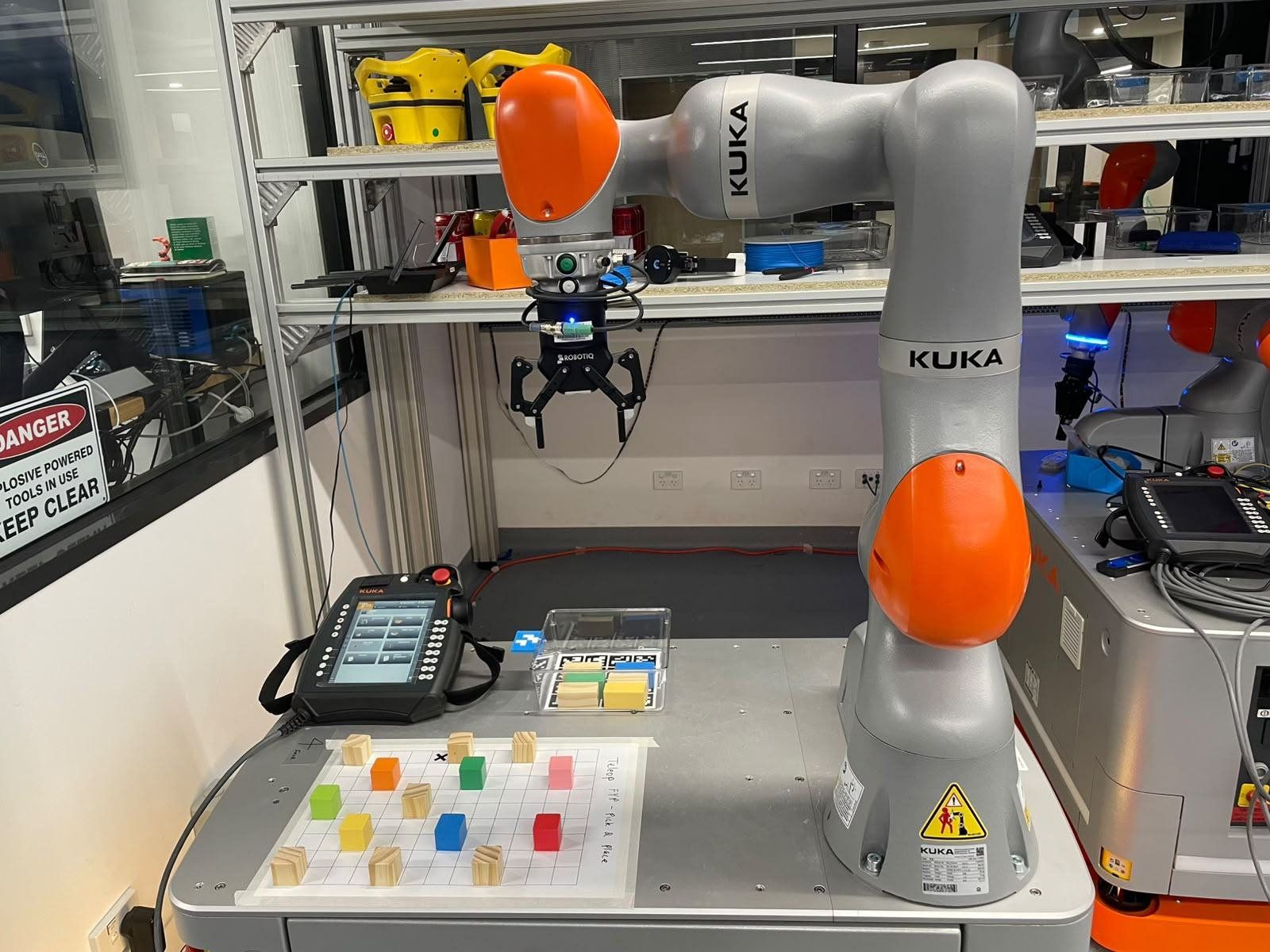
- KUKA LBR iiwa 14 R820, Robotiq 2F-85
- Comms
- Python OPC UA server, KUKA FRI
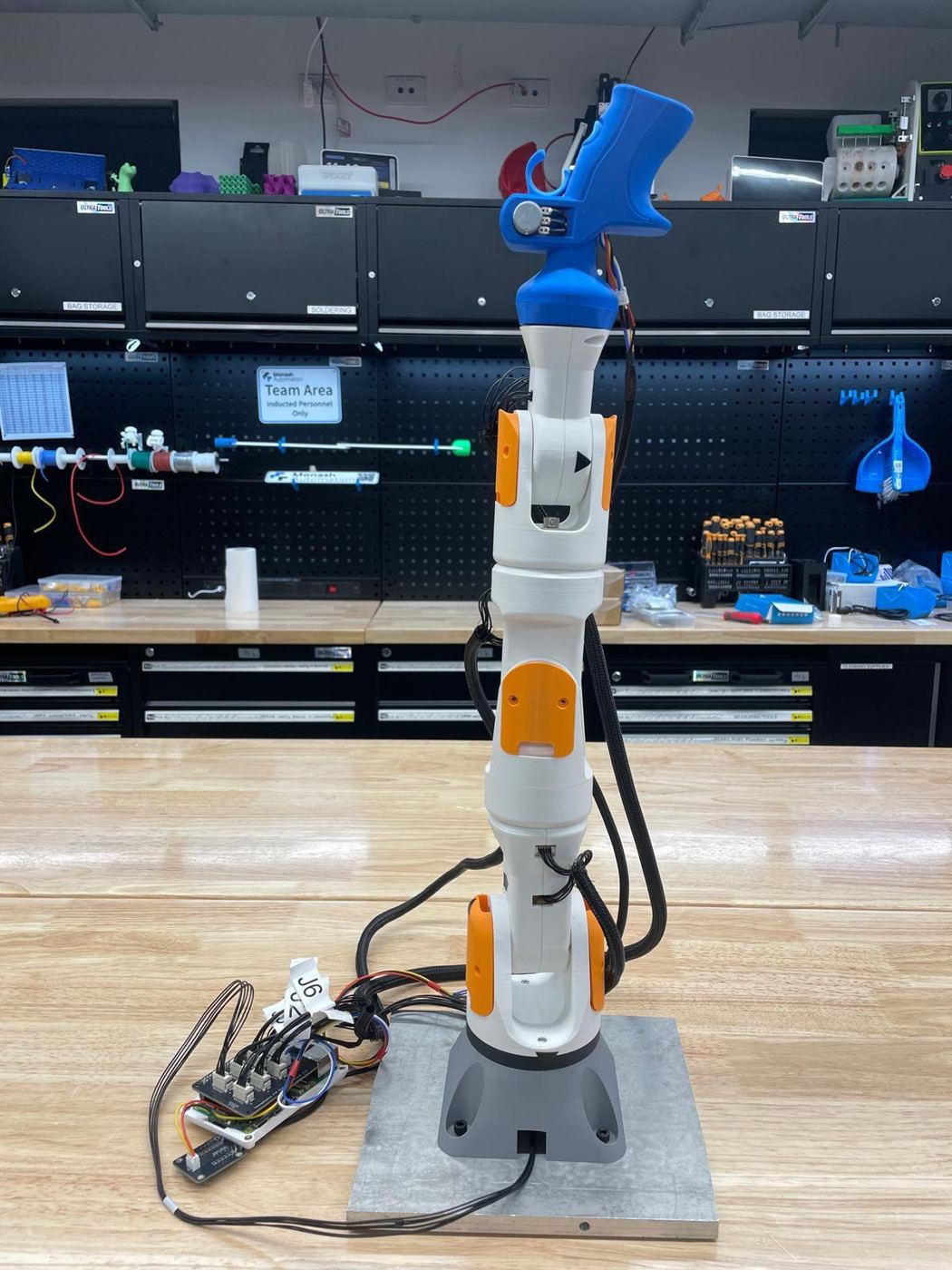
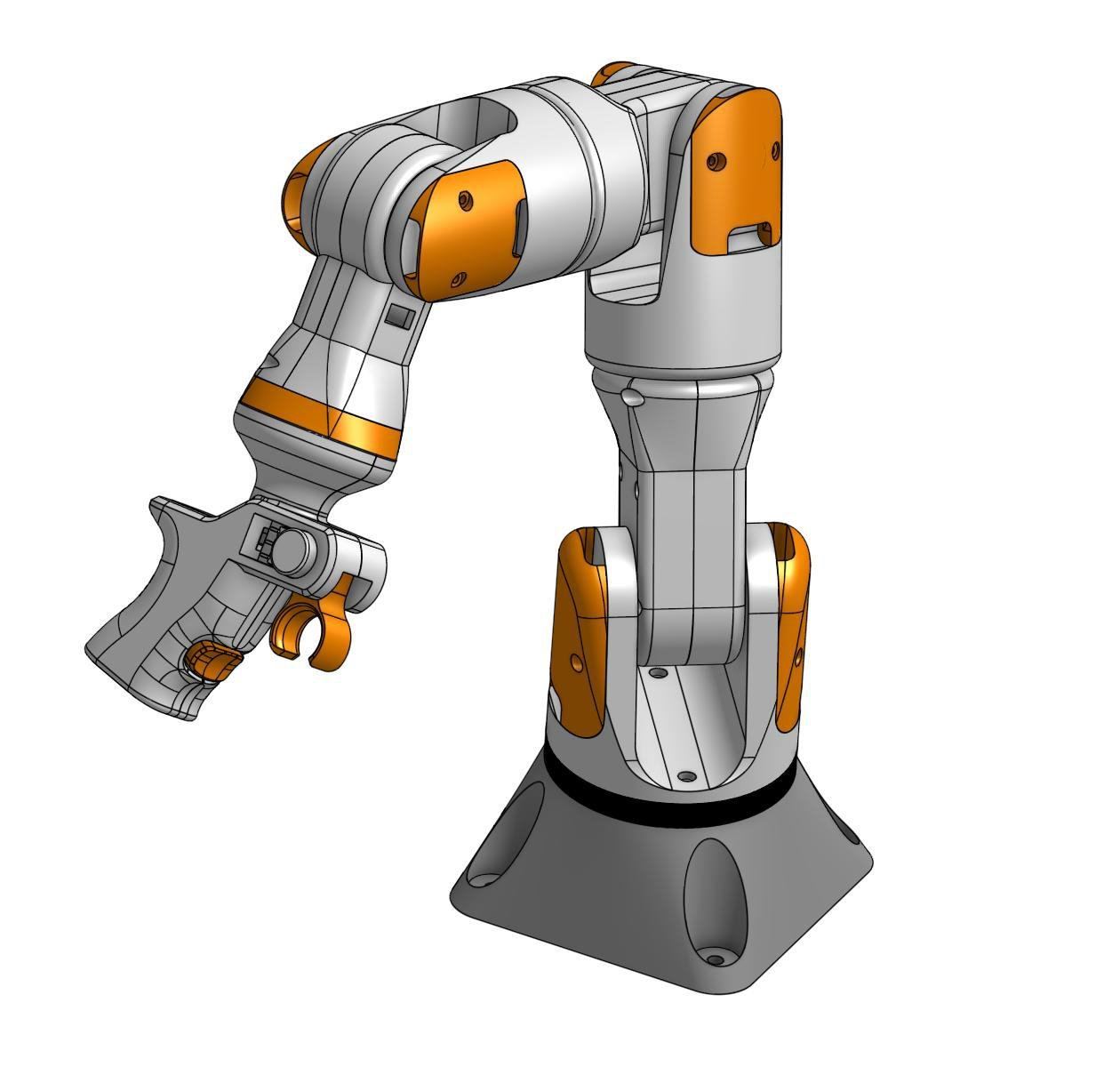
Mini arm controller design
The project designs a robotic arm controller fitted with absolute encoders to teleoperate another robotic arm or mechatronic system. It called for mechanical design, electrical integration and software communication skills. The mini arm replicates the KUKA LBR iiwa 14 R820, with mounting holes for a metal base and a custom end effector with a pushbutton deadman switch and a potentiometer trigger to actuate the KUKA's Robotiq 2F-85 gripper.
The goal is a more intuitive teleoperation method than the KUKA smartPAD teach pendant, easing operator control and learning, and extendable to applications in remote or hazardous environments.
Mapping and communication
The controller hosts its own Python-based OPC UA server, so any system with WiFi can communicate with it. Through that server and a gateway device, it streams joint values to the KUKA arm via the native FRI package, with direct N-to-N mapping that accounts for joint limits and link-length differences. The team is also developing N-to-M mapping using a Shoulder-Elbow-Wrist method to generalise to other robot arms and mechatronic systems.
Verification and user studies
To quantify ease of use and effectiveness, the team designed an ethics-approved user study with two tasks measuring three performance metrics. One task picks up blocks and places them in containers to measure throughput and efficiency; the other marks the same spot on a target ten times to measure accuracy and precision. Each task was performed with the Mini Arm, a Unity digital twin and the proprietary KUKA smartPAD, with performance recorded and survey questions answered throughout.