Stroke Rehab Glove
A rehabilitation glove that mirrors healthy-hand movement to guide the impaired hand, recognises functional grasps for task-based training, and senses early movement intention through non-contact electric-field sensing.
- Program
- MedTech
- Status
- Prototyping
- Project lead
- Jaden Mendis
- Research basis
- Dariusz Skoraczynski, Monash University
Mirror therapy
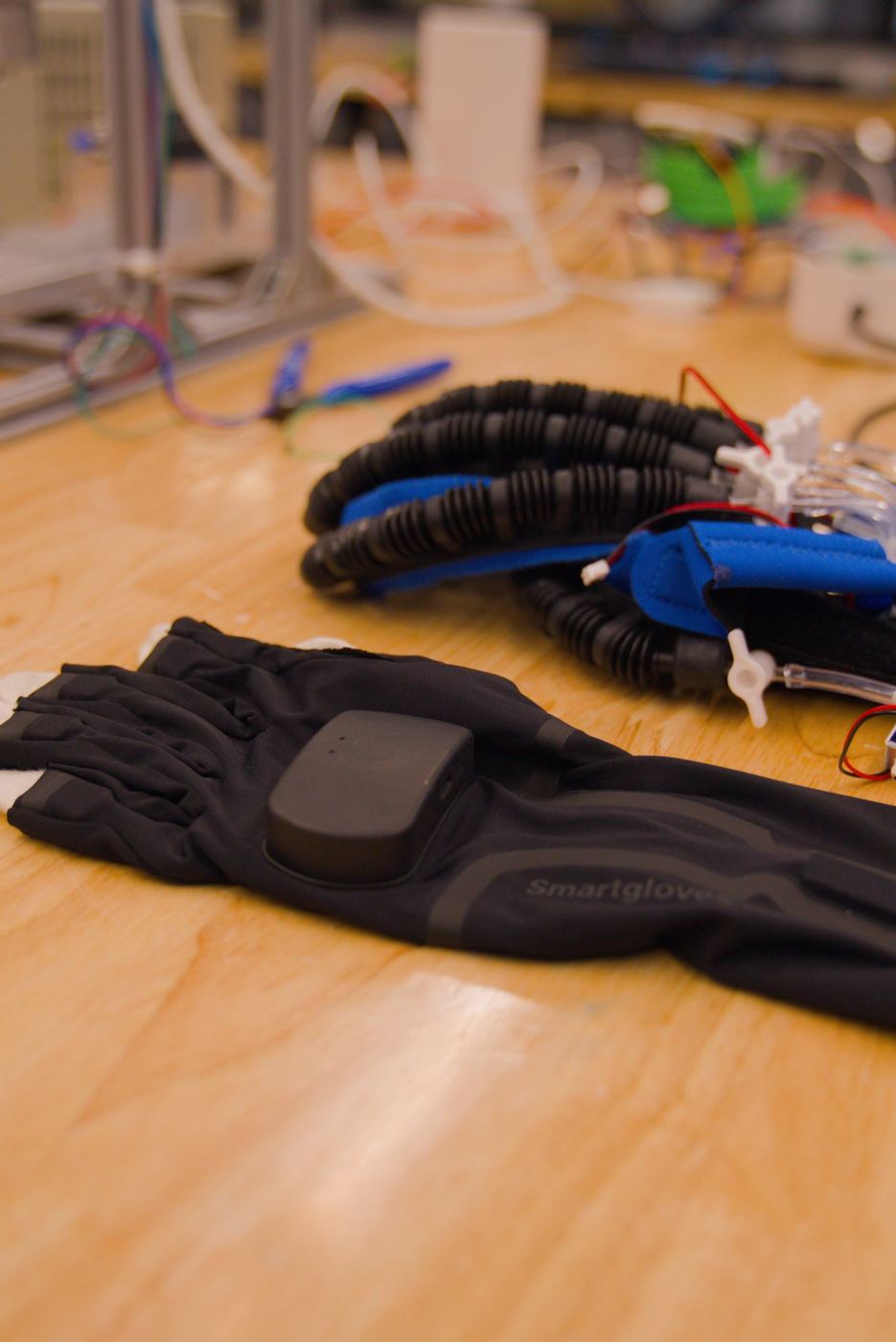
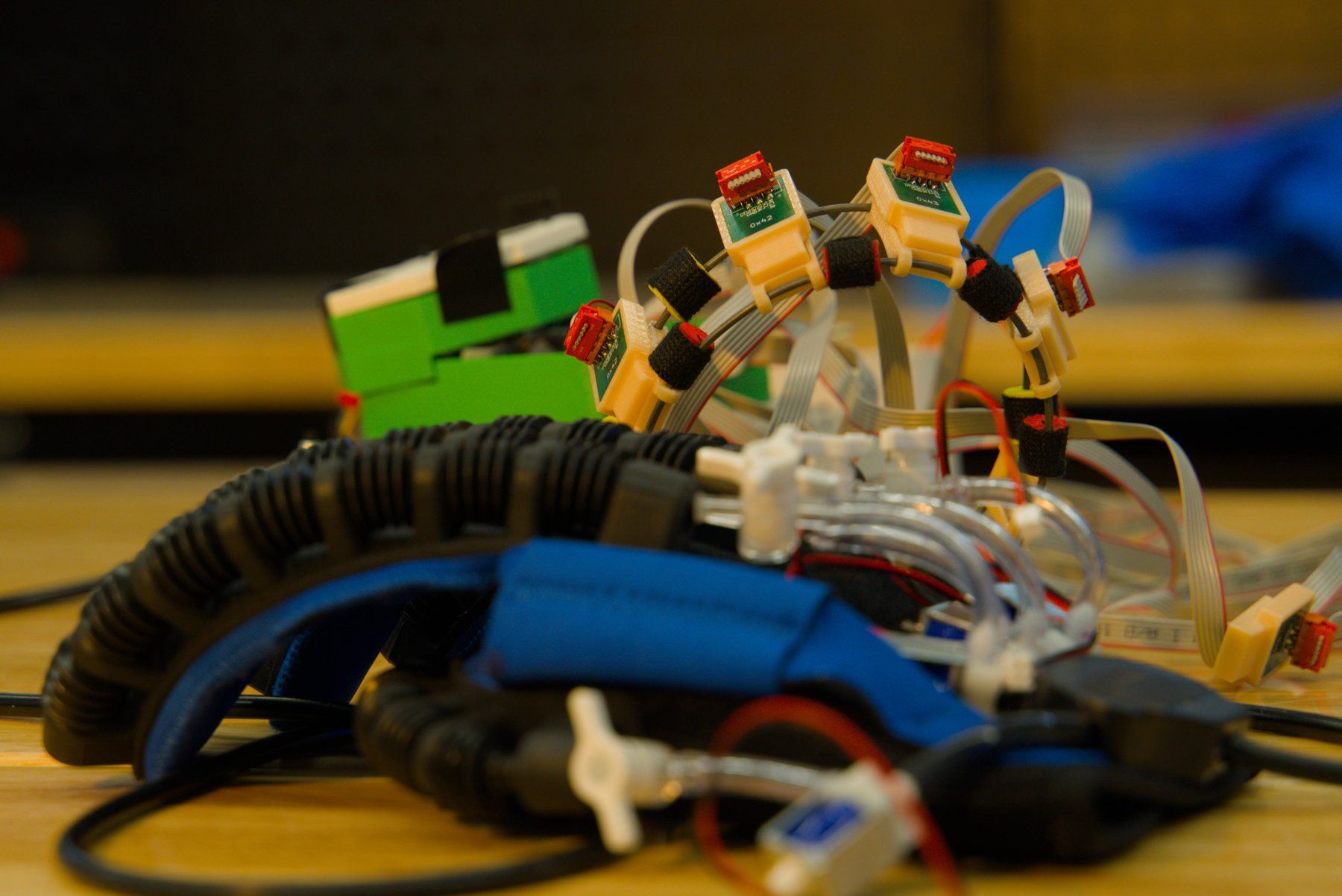
A sensing glove on the healthy hand tracks finger and hand movement in real time. Those movements are sent to an actuated glove on the impaired hand, which physically reproduces them. This creates a bilateral training loop in which voluntary movement on the good side drives assisted movement on the affected side, giving patients repetitive, guided practice without a therapist manually moving the hand through every exercise.
Gesture recognition
Rather than just opening and closing the hand, the glove recognises specific functional grips such as a power grasp, pinch or point, so rehab can be built around real tasks. The system can set a target gesture, check how closely the patient's hand matches it, and give feedback in the moment. It also offers a simple way to measure progress, tracking accuracy and consistency across sessions, working towards everyday skills like holding a cup or using cutlery.
Intention detection
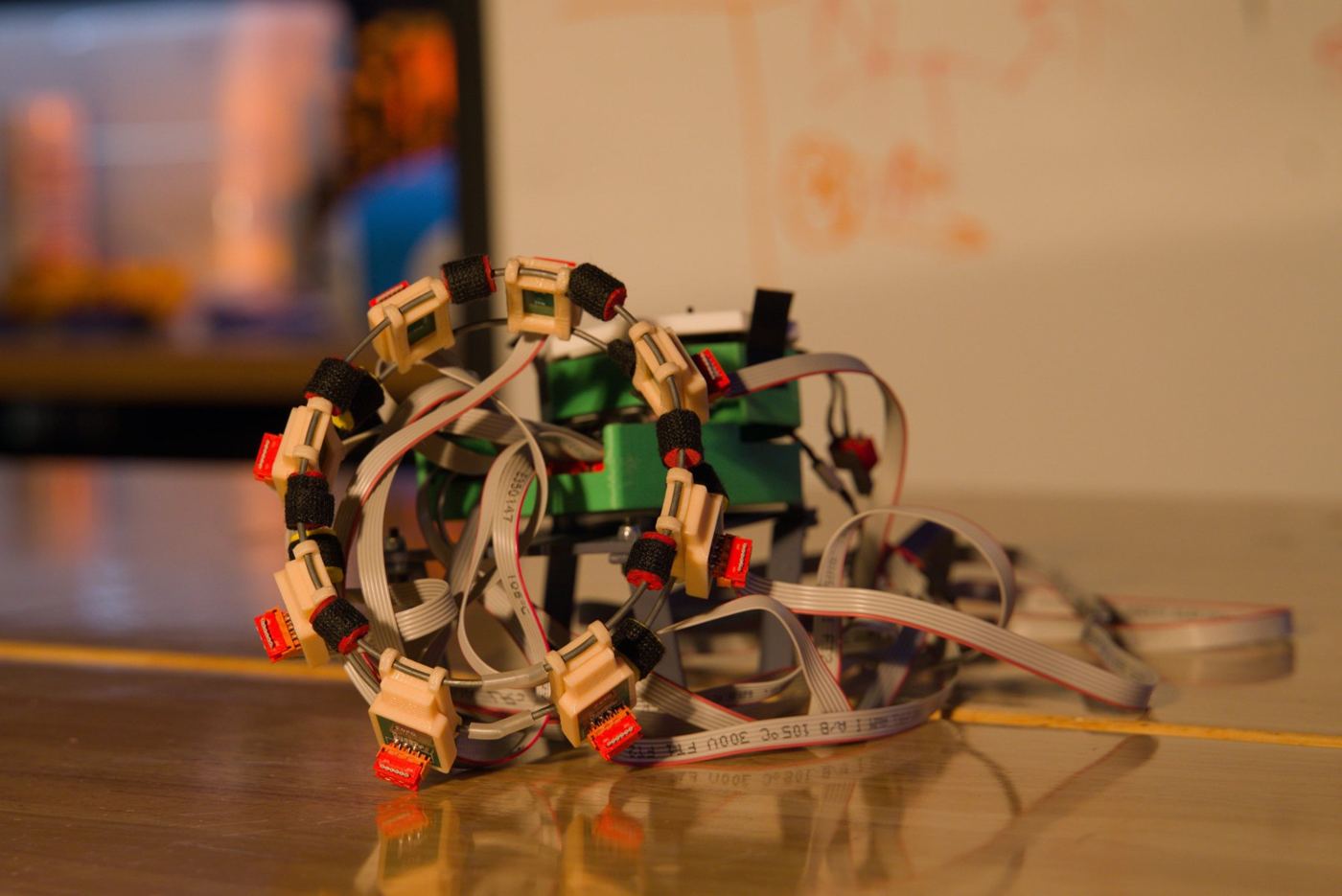
Some patients try to move their hand but cannot generate enough motion for standard sensors to detect it. The glove uses non-contact electric-field sensing, based on research by Dariusz Skoraczynski at Monash University, which picks up changes in the electric field around the hand rather than relying on sensors touching the fingers. That makes it possible to detect early signs of an attempted movement, before a full gesture forms, so the glove can respond and assist sooner.