Initiatives / Sustainability & AgTech
Operation GRAZE
Ground Roving Agribot with Zero Emissions: an agricultural robot that autonomously delivers supplement between rotational grazing paddocks.
- Program
- Sustainability & AgTech
- Status
- Testing
- Project leads
- Molly Cleeve, Wilson Cai
- Payload
- Up to 300 kg of supplement
Drive
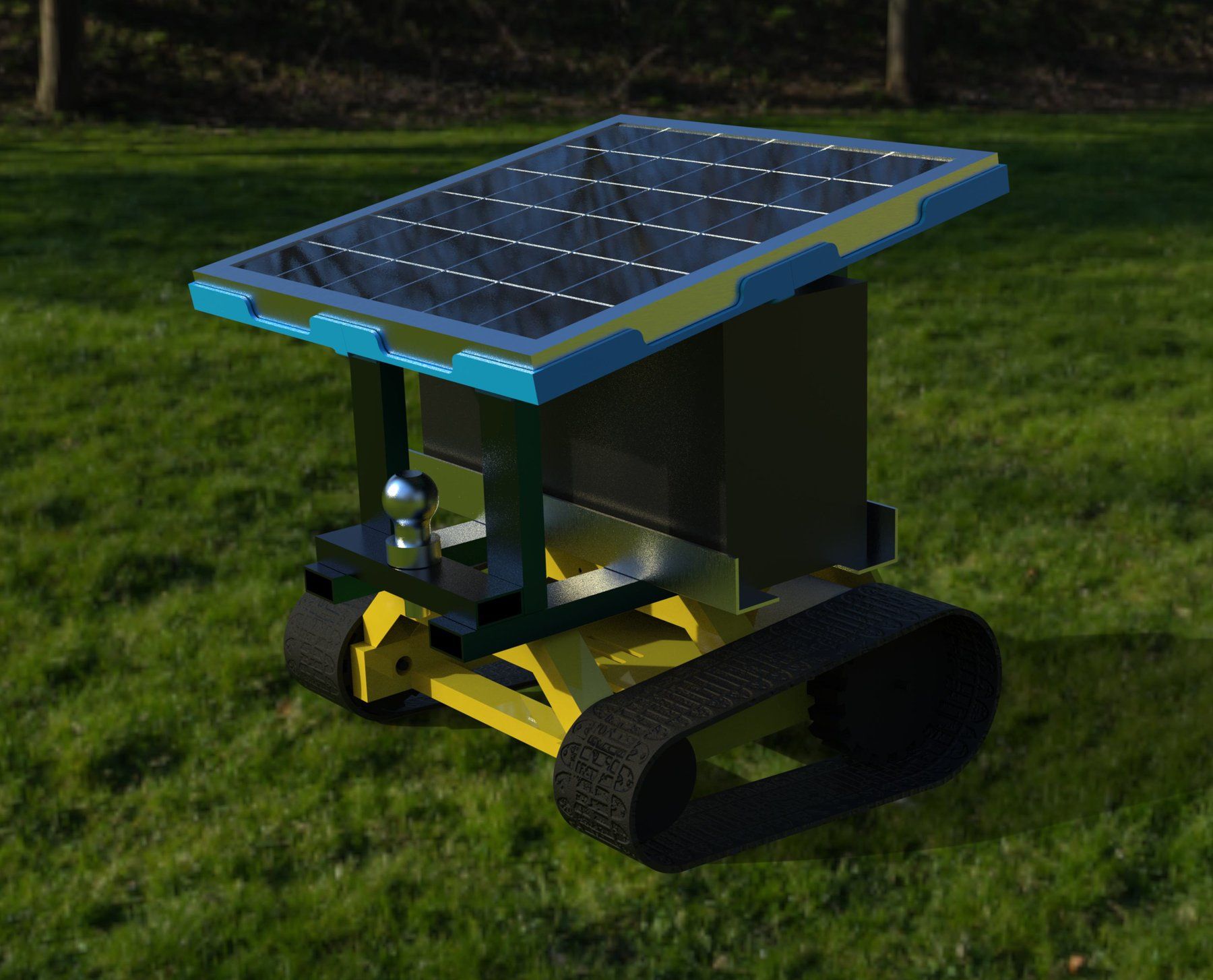
GRAZE is built on a tracked base about 500 mm square and 250 mm high, with the battery, electronics housing and solar panel mounted on top. Skid steering lets the rover turn on the spot instead of needing room to swing around. The tracks spread the weight of the trailer and keep good grip in all weather, and a tow-ball trailer lets the rover carry up to 300 kg of supplement.
Power and safety
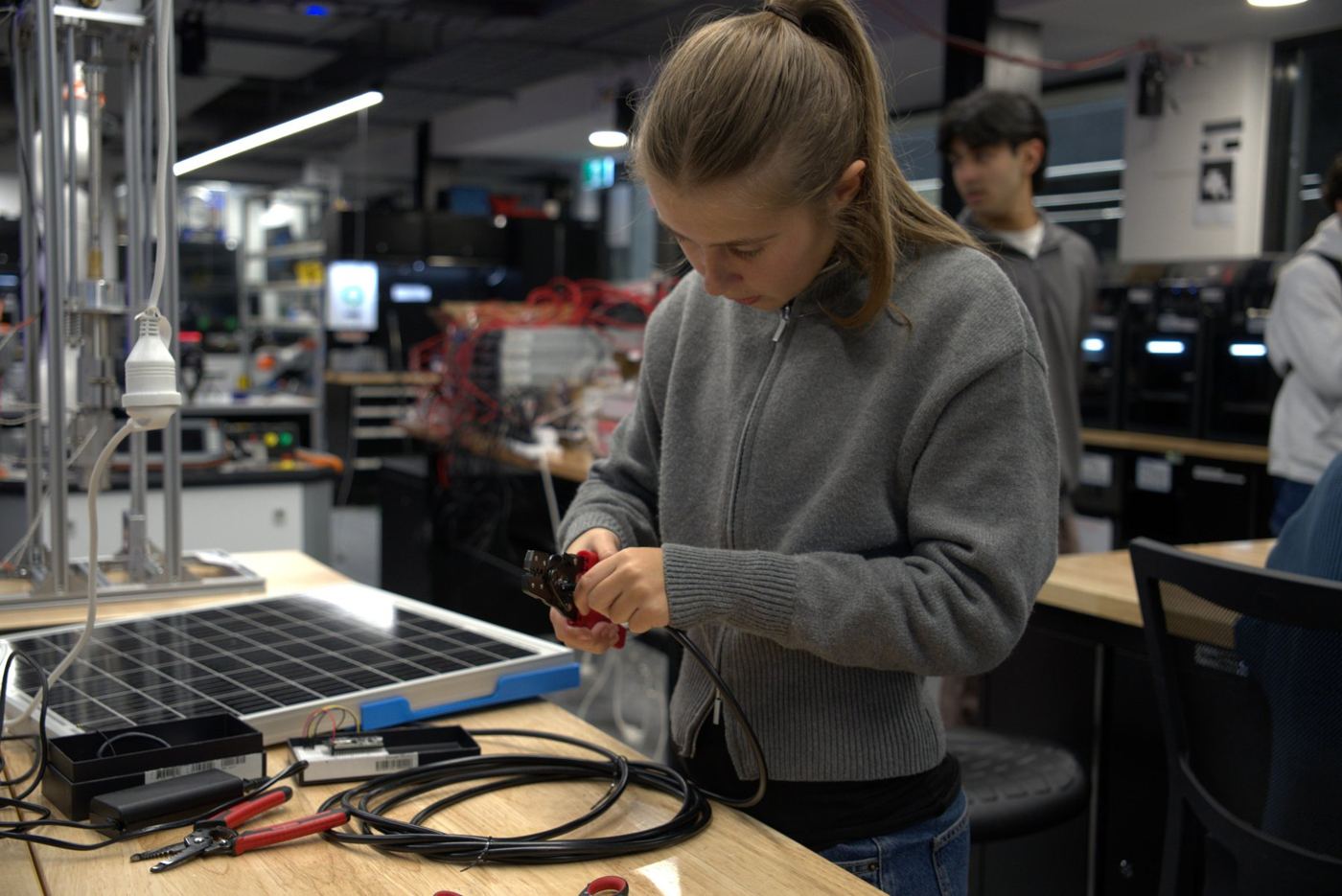
A 40 W solar panel on the roof charges a 24 V LiFePO4 battery through an MPPT controller, so the rover tops itself up while it stands in the paddock. There is no docking station and no fuel.
Safety runs on its own hardware in addition to software. A hardwired emergency stop opens a heavy-duty contactor on the drive power and works even if the controller crashes. An amber strobe and a buzzer run whenever the rover is moving, and two isolator switches allow an easy shift to manual control.
Perception and navigation
Two depth cameras on the front watch the path for livestock and obstacles. When something is in the way, the rover stops and waits, then carries on once the path is clear. Obstacle detection uses an AI detection system trained on over 600 images.
Navigation follows a route of saved GPS waypoints, with IMU data filling in between position fixes to keep it tracking straight. It is deliberately simple, because a machine working a fenced paddock needs to reach a known point reliably rather than plan its own way there.